Ambabai Temple Narkarwadi Tal Vaibhavwadi
Ambabai Temple Narkarwadi Tal Vaibhavwadi
नारकरवाडी, Taluka Vaibhavwadi — Sindhudurg SND-VAI-0017
About this place
Vaibhavwadi Taluka, Sindhudurg District, Maharashtra
The approximately 200-year-old Shri Ambabai Temple at Narkarwadi in Kokisre is an important religious and cultural heritage site of the Vaibhavwadi region. Locally, the temple is popularly known as the “Vatandara’s Temple” (Temple of the Vatandars) and is closely associated with the history and traditions of the Narkar Vatandar family.
1. History and Origin
According to local tradition, the Narkar Vatandars were among the people associated with the establishment of Kokisre village. In earlier times, travelling regularly to the main village temple of Mahalakshmi was difficult for the people living in Narkarwadi.
It is traditionally believed that the Narkar Vatandars therefore sought the divine consent (Kaul) of Goddess Mahalakshmi, the principal local deity of Kokisre, before establishing a separate shrine at Narkarwadi.
Following this tradition, the Shri Ambabai Temple was established at Narkarwadi. Because of its close association with the Narkar Vatandars, the temple came to be popularly known as the “Vatandara’s Temple.”
The temple is believed to be around 200 years old.
2. Idol of Goddess Ambabai
The main deity of the temple is Goddess Ambabai, whose idol is particularly significant to devotees.
The idol is a four-armed stone image installed on a Vajrapitha. The form of the idol bears a striking resemblance to the famous Shri Mahalakshmi (Ambabai) idol of Kolhapur.
According to the available description, the goddess is depicted with four arms holding objects including a shield, mace, a fruit resembling a pumpkin, and a leaf-like object. A beautifully carved wooden Prabhavali surrounds the idol.
An interesting feature of the image is the representation of a Shiva Linga and Sheshnag above the head of the goddess.
It is important to distinguish between tradition and documented history: the available source describes the idol as resembling the Kolhapur Ambabai idol, but does not establish that the idol was brought from Kolhapur.
3. Traditional Konkan Architecture
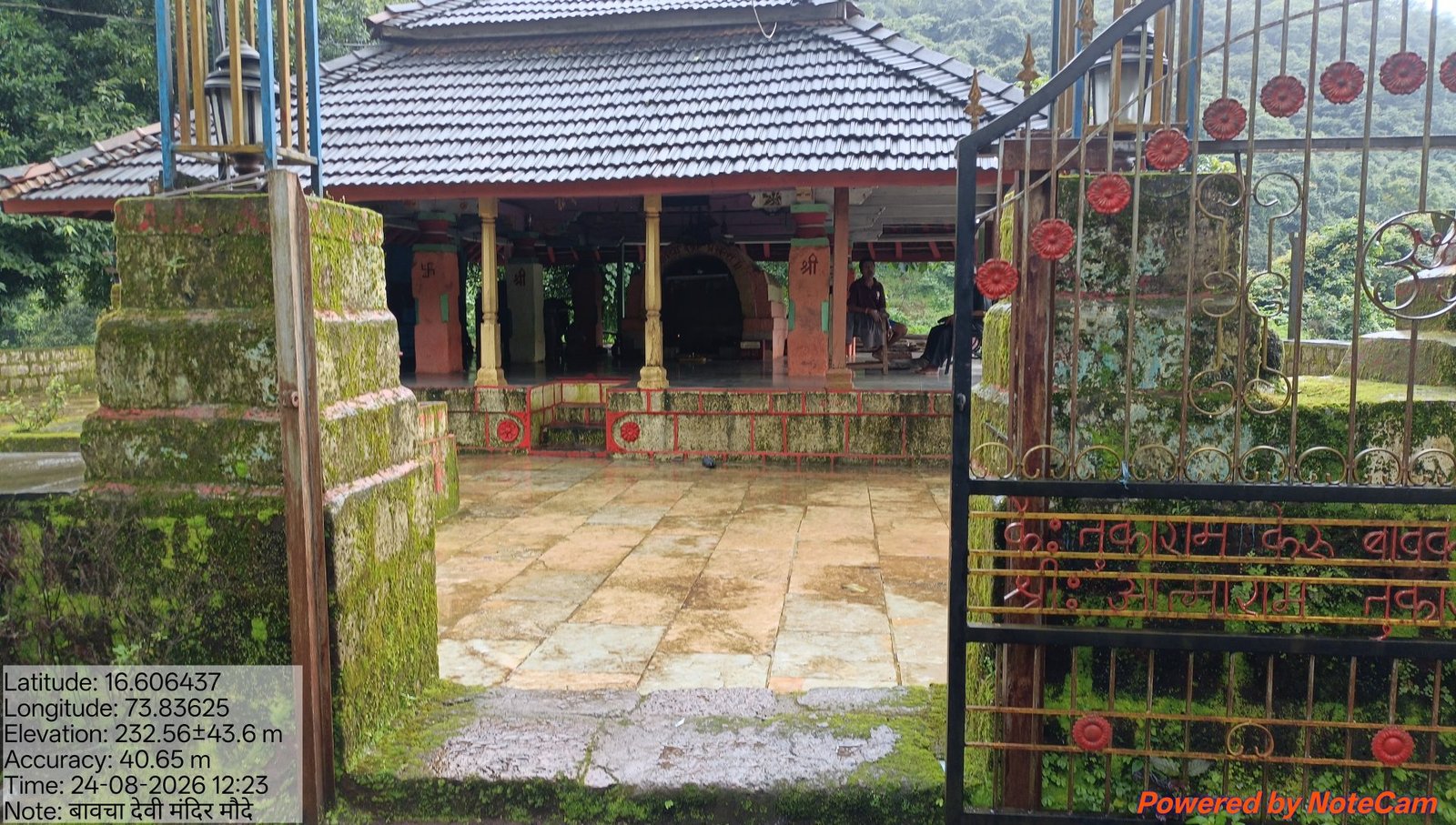
The temple is a beautiful example of traditional Konkan temple architecture.
Its important architectural features include:
A traditional tiled roof
A two-storey structure
Stone masonry walls
Extensive use of wood in the interior
A spacious courtyard in front of the temple
A Tulsi Vrindavan in the temple courtyard
A raised plinth approximately three feet above ground level
A wooden-pillared assembly hall (Sabhamandap)
The temple reflects the traditional building techniques and craftsmanship found in the Konkan region.
4. Beautiful Wooden Carvings
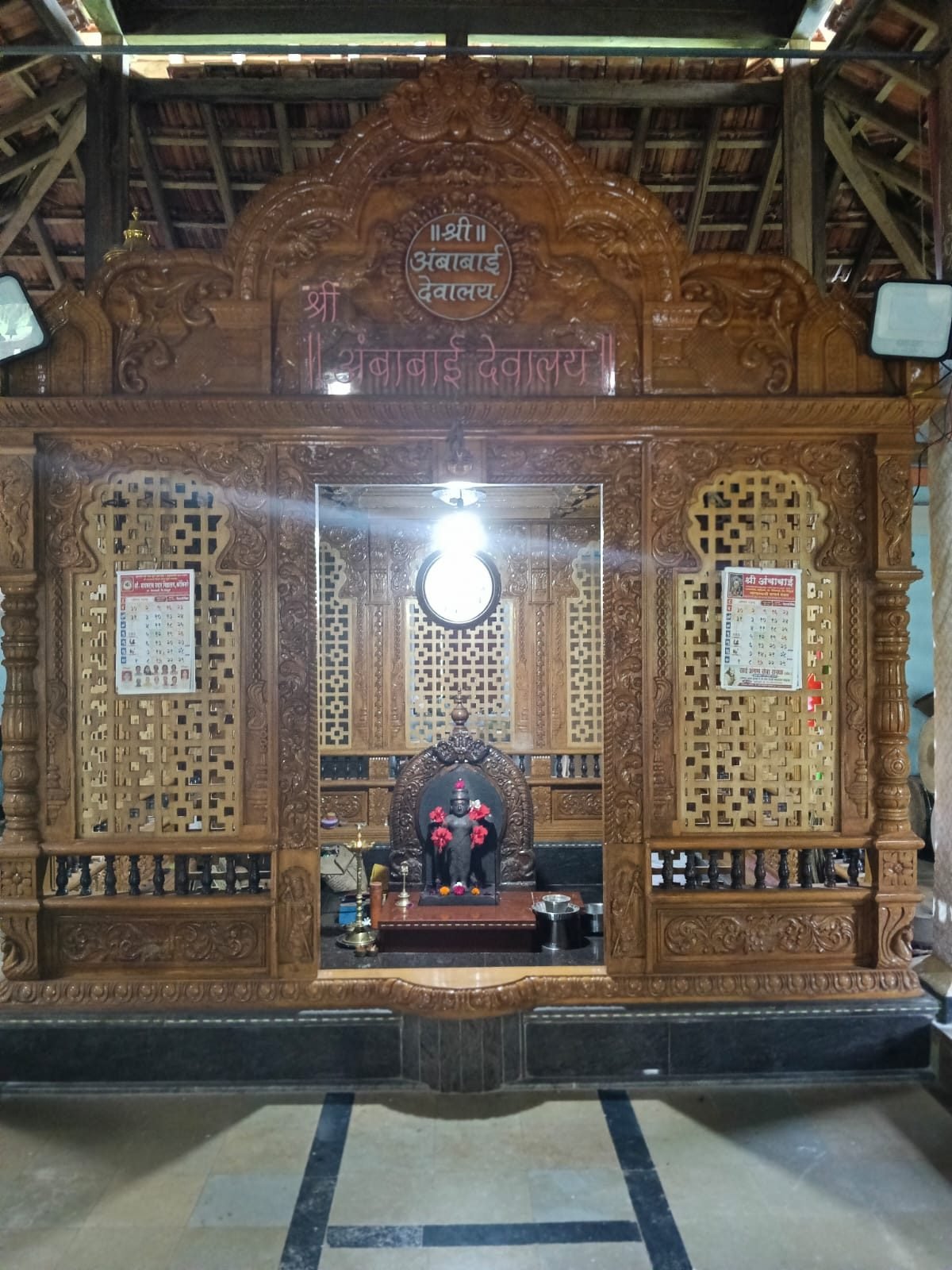
One of the most distinctive features of the temple is its traditional wooden craftsmanship.
The sanctum (Garbhagriha) contains finely carved wooden elements, including:
Decorative wooden pillars
Intricate wooden lattice windows
Floral and creeper motifs
Sculptural details
Images of Jaya and Vijaya as doorkeepers
A decorative figure above the doorway
Carved elephants holding ceremonial chowries
A beautifully decorated wooden Prabhavali behind the deity
These features make the temple valuable not only from a religious perspective but also from the perspective of traditional Konkan art and architectural heritage.
5. Religious Festivals
The temple has a vibrant annual religious calendar and is known for its devotional activities.
Gudi Padwa
The annual cycle of celebrations traditionally begins with Gudi Padwa, when a ceremonial Gudi is erected.
Shravan Month
During the holy month of Shravan, devotional programmes are organised, particularly on:
Mondays
Fridays
Saturdays
Bhajans and other devotional activities attract devotees from the surrounding villages.
Margashirsha – Akhand Harinam Week
One of the major religious events is the Akhand Harinam Saptah, traditionally held around Margashirsha Shuddha Ekadashi.
Devotees and Bhajani Mandals from approximately 30–35 surrounding villages participate in the programme.
The celebrations include:
Warkari Bhajans
Dindi Bhajans
Continuous devotional singing
Religious programmes
Satyanarayan Puja
Mahaprasad
The devotional programme traditionally continues day and night.
Tripurari Purnima
On Tripurari Purnima, thousands of lamps are traditionally arranged around the temple, creating a beautiful and spiritually significant atmosphere.
Friday Mahaarati
A special Mahaarati is performed every Friday evening, attracting a large number of devotees and villagers.
6. Temple and Education
One of the most remarkable aspects of the Ambabai Temple is its association with education and community development.
The temple is associated with the Zilla Parishad Primary School and Anganwadi at Narkarwadi.
According to the available information, donations and resources associated with the temple have been used to support the education of children in the village.
The school has been provided with modern educational facilities such as:
E-learning facilities
Projector
Large display/LED screen
Computers
Laptops
Other digital learning resources
This reflects the community's effort to combine religious tradition with modern education.
7. Skill Development for Children
The temple and local community have also supported activities aimed at developing children's practical and creative skills.
Programmes have included exposure to:
Radio jockey training
Camera operation
Anchoring and presentation
Project preparation
PowerPoint presentations
Computer and laptop use
Thus, the temple has developed an identity beyond a traditional place of worship and has become associated with community education and youth development.
8. Cultural Importance
The Shri Ambabai Temple represents a combination of:
Religion + Local History + Vatandar Tradition + Traditional Architecture + Wood Carving + Folk Culture + Education
Its association with the Narkar Vatandar tradition gives the temple a distinctive historical identity.
The traditional story of obtaining the Kaul of Goddess Mahalakshmi before establishing the shrine is particularly important to the local community and forms part of the temple's oral heritage.
Photographs
Getting there
By Bus: State/local bus services are available in the Vaibhavwadi–Narkarwadi area.
By Train: The nearest railway station is Vaibhavwadi Road Railway Station. From the station, visitors can continue by road using a local taxi/auto-rickshaw.
By Local Transport: Shared auto-rickshaws are available in the area.
What you can do
Facilities available
Please note
isitors should exercise caution while walking on the traditional stone steps and uneven surfaces around the temple.
During the monsoon season, the surroundings may become slippery; visitors are advised to wear suitable footwear.
Children and elderly visitors should be accompanied and assisted where necessary.
During festivals and major religious events, the temple may become crowded. Visitors should follow queue and crowd-management instructions.
Visitors should maintain cleanliness and avoid littering in the temple premises.
Respect the sanctity of the temple and follow local religious customs and instructions.
Parking should be done only in designated or safe areas without obstructing the access road.
In case of heavy rain, visitors should take extra care while travelling on local village roads.
Visitor ratings
No reviews yet — share your experience below.